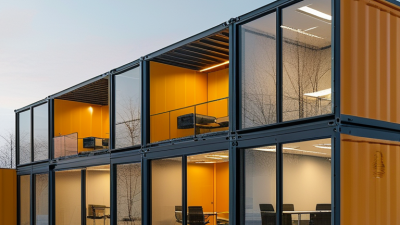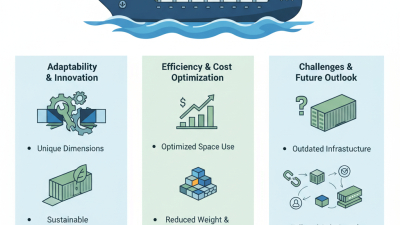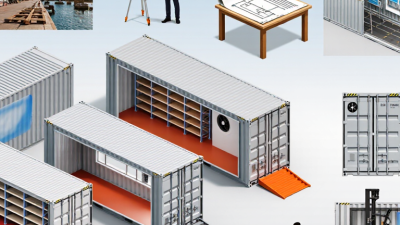
China’s modular office market is drawing attention as companies seek faster, more adaptable workspaces. Factory-built offices can arrive as finished modules, then be assembled around desks, meeting rooms, and service cores. The appeal is practical: predictable production, less site disruption, and layouts that can change as teams grow. But a modular label alone proves little. Manufacturing quality, transport planning, and installation all matter.
McKinsey’s 2019 report, “Modular construction: From projects to products,” estimated that modular methods could accelerate project delivery by 20–50% and reduce costs by up to 20% in suitable cases. These are potential gains, not guarantees; building type, design choices, and local supply chains affect results. Offsite-construction researcher Ryan E. Smith has put the principle succinctly: “Offsite construction is a process, not a product.” That distinction matters when comparing manufacturers. A polished showroom cannot replace evidence of engineering capability, quality controls, and reliable after-sales support.
This guide introduces ten China-based modular office manufacturers for closer evaluation. It focuses on practical comparison points: customization, material specifications, production capacity, delivery coordination, and project experience. Buyers should ask for drawings, verified project references, and clear scope details before treating a quotation as comparable. A low price may leave important work outside the contract. That deserves a second look. The right supplier is not simply the one with the most attractive module; it is the one whose production system fits the project’s requirements and site conditions.
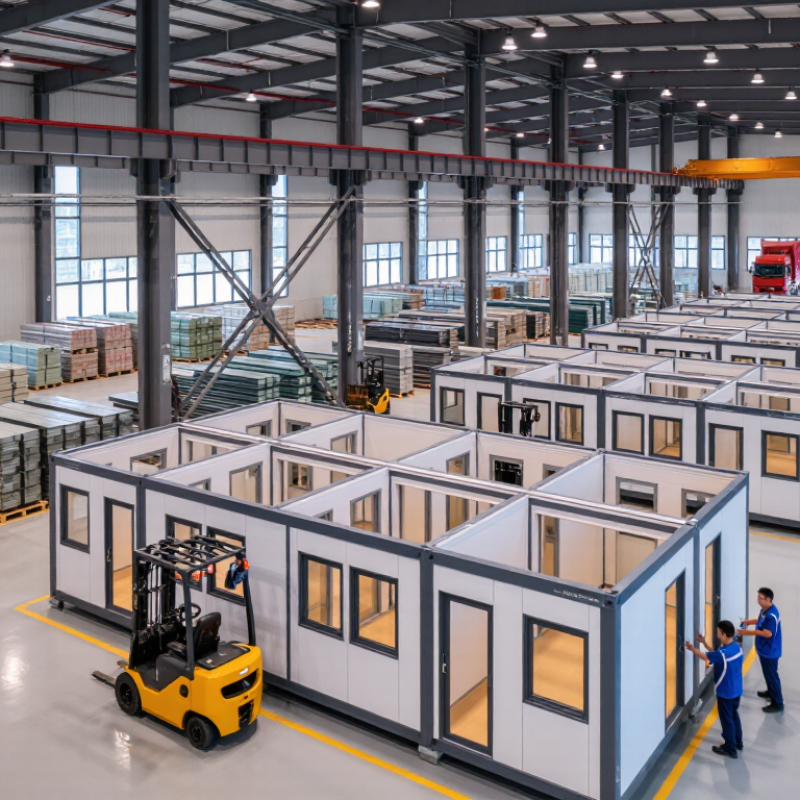
A modular office is a workspace assembled from factory-built sections and installed on a prepared site. Units may include walls, flooring, wiring, lighting, and insulation, depending on the project. The key difference is that much of the work happens before delivery. That can shorten on-site disruption, though transport and installation still need careful planning. A row of offices can be configured with desks, meeting rooms, storage, and basic services. The layout should match daily tasks, not just the available floor area.
These offices are used at construction sites, schools, healthcare facilities, and expanding businesses. At a building site, a compact unit might hold plans, laptops, and a small meeting table, close to the work zone. Schools may use modular rooms to handle temporary enrollment increases. Clinics can use them for administrative or support functions, subject to suitable design and equipment.
Useful, but not magic. Site access, foundations, ventilation, and utility connections can affect cost and comfort. Sound can travel between rooms, too. A practical specification should consider local weather, expected occupancy, and how long the space will be needed. Modular construction offers flexibility, but a rushed layout can still create awkward corridors and poor lighting.
China’s modular office manufacturing industry begins with a project brief, not a production line. Manufacturers review room layouts, occupancy needs, site access, and utility connections before preparing drawings. A narrow doorway or uneven slab can change how modules are sized and delivered. Small details matter.
Factory work then turns those drawings into repeatable assemblies. Teams may cut and weld structural frames, install wall panels, and route electrical or plumbing services indoors. This controlled setting can make inspection easier, though it does not remove the need for careful checks. Supervisors should verify dimensions, fastening points, insulation, and finish quality at several stages. A missed measurement can travel all the way to the job site.
Before shipment, modules are usually protected and arranged around the installation sequence. On site, cranes, foundations, access roads, and weather can affect the schedule. The factory may be precise; the site is less predictable. Manufacturers and project teams need clear records for revisions, inspections, and handover. In practice, coordination is not always perfect. A late change to a doorway or cable route can require rework, so early decisions deserve real attention. Modular construction can shorten some activities, but the result still depends on design quality, transport planning, and competent installation.
China Top 10 Modular Office Manufacturers
Criteria for Evaluating China’s Modular Office Manufacturers
A strong evaluation starts with the building itself, not a polished catalogue. Check whether the manufacturer can provide structural calculations, material specifications, fire-test records, and clear quality-control procedures. Ask how factory inspections are documented and how defects are handled after installation. Details matter. McKinsey’s 2019 report, Modular Construction: From Projects to Products, estimates modular methods can shorten project schedules by 20–50% and reduce costs by up to 20%. Treat these as potential gains, not promises; site access, design changes, and transport can erase them.
Compare more than the quoted price. Review the proposed wall, roof, and floor assemblies, then ask for energy-use assumptions and maintenance intervals. The World Green Building Council’s 2019 report estimates that materials and construction account for about 11% of global carbon emissions. Request material quantities and, where available, verified environmental data. A neat render tells little. This is not a perfect proxy, but it helps expose vague sustainability claims.
Finally, test delivery capacity with evidence: completed projects of similar size, realistic production lead times, installation plans, and spare-parts arrangements. Confirm which design changes affect price or schedule. Speak with past clients, ideally about defects and response times, not just appearance. A factory visit can reveal whether workstations are organized and inspection records are accessible. Small details, often missed. A manufacturer’s strongest claim should survive a drawing review and a site visit.
Suggested weighting for comparing manufacturers, not a ranking of individual companies.
Prioritize customization, production capacity, and quality and compliance when assessing suppliers. Adjust the weights to match project requirements, and verify claims through documentation, factory audits, and reference checks.
Profiles of ten leading modular office manufacturers in China are most useful when they compare capability, not marketing claims. The companies in this field typically offer steel-frame modules, container-based offices, or prefabricated panel systems. Their profiles should clarify factory capacity, customization options, transport limits, installation time, and after-sales support. These details matter on site: a module that fits the design may still fail if a narrow access road blocks delivery.
McKinsey’s 2019 report, Modular construction: From projects to products, says modular methods may shorten project schedules by 20–50% and reduce costs by up to 20%. These are potential gains, not guarantees. Results depend on design standardization, logistics, and site readiness. A sound manufacturer profile should therefore include project references, material specifications, quality-control steps, and realistic lead times. Product photos alone are weak evidence. Some comparisons also overlook maintenance; that is worth questioning.
Tips: Ask for drawings, fire and insulation specifications, and a sample delivery schedule. Check whether the quoted price includes foundations, utilities, and installation. Compare like with like. A low initial quote can hide later costs. For ten manufacturers, consistent criteria make the profiles more credible and useful to buyers.
A useful comparison of China’s top modular office manufacturers starts with product range, not a polished showroom. Check whether each supplier offers only standard office cabins or also multi-storey modules, meeting rooms, sanitation units, and service cores. Ask for drawings showing panel thickness, insulation, ceiling voids, and cable routes. These details affect comfort and maintenance. Small differences matter.
Customization should be tested against a real brief. Can the factory adjust room widths, window positions, finishes, and electrical layouts without disrupting production? Request a sample floor plan and a bill of materials, then compare revision times and stated tolerances. McKinsey’s 2019 report, “Modular construction: From projects to products,” says modular projects can be 20–50% faster and may reduce costs by up to 20% in suitable cases. These are potential gains, not guarantees. Site access, transport limits, and late design changes can quickly erode them.
Project capability shows up in coordination. Ask who checks foundations, connects utilities, manages delivery sequencing, and resolves defects after installation. Look for completed-project records with dates, module counts, and clear scope descriptions, rather than photos alone. A tidy catalog can still hide awkward handoffs. That comparison is imperfect: published case studies rarely reveal every delay or cost change. But a supplier willing to explain assumptions, exclusions, and risks gives buyers firmer ground for evaluating bids.