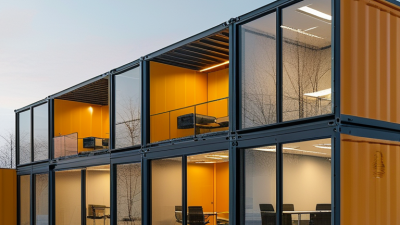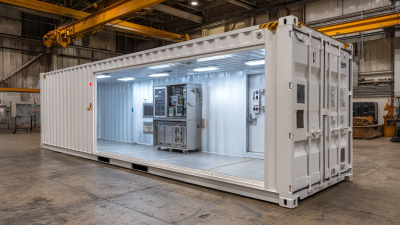
A modular office building can be more than a quick workspace. It may include private offices, meeting rooms, reception areas, and restrooms, all planned around a company’s daily needs. Factory production can improve consistency and shorten on-site work. But speed is not guaranteed. Design approvals, transport access, and site preparation still shape the schedule.
Choosing a supplier means looking beyond attractive renderings. Buyers should compare structural options, insulation, ventilation, electrical systems, customization, delivery coverage, and after-sales support. A supplier experienced with schools or construction-site cabins may not be the best fit for a permanent office. Details matter: Can a module fit through the site entrance? Are wiring plans and maintenance requirements clearly documented? These questions can reveal gaps early.
This article introduces ten notable modular office building suppliers with operations or projects across global markets. It is a practical starting point, not a universal ranking: supplier capabilities, regional availability, and project requirements differ. Where possible, compare published product information with references, technical specifications, and local project needs. Certifications and building standards also vary by country, so readers should verify which requirements apply to their site. No shortlist can replace that work. Some comparisons may remain imperfect, especially when suppliers disclose different levels of detail. Still, a clear review of products, delivery models, and support can help teams create a more informed shortlist.

A modular office building supplier coordinates the work that turns repeatable factory components into a usable workplace. Its role may cover early design, material selection, off-site production, delivery, on-site assembly, and building services. The boundaries vary, so buyers should ask exactly what the supplier handles and what remains with local contractors.
Look for practical evidence, not polished renderings alone. A capable team can explain how room layouts, insulation, lighting, ventilation, and electrical systems fit together. It should also discuss access for delivery trucks and cranes, installation sequencing, and how site conditions may affect the schedule. Details matter. Ask to review project records, inspection procedures, maintenance guidance, and references for buildings with similar uses and climates.
A dependable supplier communicates changes early and provides clear drawings, specifications, and responsibilities. Ask how it manages damaged modules, late design revisions, or mismatched utility connections. These are ordinary risks, but answers reveal whether the team understands construction beyond the factory floor. No supplier is automatically right for every project. A system that works well for a small office may need careful adaptation for a larger, busier workplace, and that adaptation deserves close review.
Ranking modular office building suppliers takes more than comparing factory size. Capacity matters when a project needs many repeatable rooms, but published output should be checked against active production lines, staffing, and delivery records. A large figure on a brochure proves little by itself. Buyers can request recent schedules, inspection reports, and details about protecting modules during transport. Consistency matters. Numbers can mislead.
Geographic reach shows whether a supplier can coordinate design, shipping, installation, and after-sales support across the target region. Ask for examples of completed projects with similar climates, access limits, and building sizes. Certifications also need careful review: check the issuing body, validity dates, and which products or processes each certificate actually covers. A certificate for one component may not verify an entire building system. No score is perfect. A transparent ranking should explain how capacity, reach, and certifications are weighted, then separate verified records from supplier claims. Some evidence may still be incomplete, so readers should treat close rankings as provisional rather than definitive.
Identifying the world’s ten leading modular office suppliers is less straightforward than comparing revenue. No independent global ranking uses one consistent measure. A useful shortlist considers delivery record, manufacturing capacity, engineering support, and local installation experience. It also checks practical details: module dimensions, ceiling service zones, acoustic separation, and how mechanical systems connect on site. Small interface failures can delay an entire floor.
McKinsey’s 2019 report, “Modular construction: From projects to products,” estimated that modular construction could capture a $130 billion market in the United States and Europe. It also described potential cost reductions of up to 20% and faster project delivery, not guaranteed outcomes. These estimates help explain interest, but office results depend on design repetition, transport distance, and site access. UNEP and GlobalABC reported that buildings and construction generated 37% of global energy- and process-related carbon dioxide emissions in 2022. That matters. Suppliers should therefore disclose material impacts and operational energy assumptions, not just factory speed. Still, rankings vary. Published case studies rarely compare suppliers under identical conditions, so buyers should verify references, quality controls, and maintenance support directly.
Market context for evaluating modular office building suppliers worldwide
The 2023 market value is reported at USD 91.75 billion. Later figures are illustrative estimates calculated using a 7.5% annual growth rate; they represent the overall modular construction market, not office buildings or individual suppliers.
Source: Grand View Research, Modular Construction Market report. Values for 2024–2030 are calculated estimates based on the reported growth rate.
Modular construction can shorten project schedules by 20–50%, according to McKinsey’s 2019 report, “Modular construction: From projects to products.” The gain comes less from building faster than from moving work offsite. While crews pour foundations, factory teams can assemble wall panels, service racks, and room modules under controlled conditions. Once the site is ready, units arrive for lifting and connection.
That overlap can reduce weather delays and compress labor-heavy stages. A bathroom pod, for example, may arrive with plumbing and finishes already installed. Crews connect services instead of coordinating every trade in a cramped room. Repetition also lets teams refine details across floors. Small wins add up.
But 20–50% is potential, not a guaranteed result for every project. Actual outcomes depend on early design decisions, transport limits, crane access, factory capacity, and permitting. A late change to a riser location can trigger rework both on the production line and onsite. That risk is easy to underestimate. Teams should compare the full critical path, including design, approvals, delivery, and commissioning—not just factory production. A pilot bay and realistic logistics plan can test assumptions before teams promise a handover date.
When comparing the top 10 modular office suppliers, buyers should price the finished building, not just the factory quote. Include transport, cranes, foundations, utility connections, inspections, and any site-specific redesign. McKinsey’s 2019 modular-construction report estimated that projects could be delivered 20–50% faster, with potential cost reductions of up to 20%. These are industry-wide estimates, not a promise for every office. Distance, design changes, and local labor can quickly narrow the gap. The details matter.
Building-code readiness deserves equal scrutiny. Ask for drawings, fire and structural documentation, and a clear account of who coordinates reviews with local authorities. A module accepted in one region may need changes elsewhere. Regional support also means more than a sales contact: check who can attend site meetings, resolve installation issues, and source replacement components nearby. Picture a delivery truck delayed at a narrow site entrance. Who handles the revised lift plan? Get that answer in writing.
Compare warranty terms, spare-part availability, and response times alongside price. The Dodge Data & Analytics 2020 prefabrication and modular construction report examines industry adoption and project practices; its findings are a useful reminder to assess coordination, not only factory output. Ask suppliers to separate confirmed costs from allowances, then compare like-for-like scopes. Some uncertainty remains. A careful buyer should leave room for it.
| Profile | Typical modular offering | How to compare costs | Relevant code framework | Regional support to verify |
|---|---|---|---|---|
| 01 · United States | Permanent or relocatable volumetric offices; single- and multi-storey configurations are available in the market. | Compare the same scope: design, factory fit-out, transport, crane setting, foundations, utility connections, permits, and commissioning. Confirm whether sales tax and site work are included. | The locally adopted building code, commonly based on the International Building Code (IBC), plus state and local amendments. Modular approval and inspection processes vary by jurisdiction. | Ask who coordinates state modular-program approvals, local permits, site inspections, delivery access, and post-installation service. |
| 02 · Canada | Factory-built office modules for permanent facilities, construction sites, and remote operations. | Request separate prices for the building, winterization, transport distance, foundations, site utilities, and local engineering. Compare heating and envelope specifications for the project climate. | The National Building Code of Canada as adopted or amended by the province or territory, alongside applicable local requirements. | Confirm provincial or territorial code coordination, cold-weather installation capability, local service coverage, and responsibility for permits. |
| 03 · United Kingdom | Volumetric and panelized office buildings, including temporary and permanent commercial uses. | Check whether the quotation covers delivery, lifting, foundations, fire protection, building-services connections, and Building Regulations documentation. Compare the same fit-out level. | Building Regulations and associated guidance applicable to the project’s jurisdiction; requirements differ across England, Wales, Scotland, and Northern Ireland. | Check local design coordination, building-control support, delivery constraints, fire-safety documentation, and after-sales response times. |
| 04 · Continental Europe | Factory-produced modular offices designed for local commercial, industrial, and public-sector projects. | Separate factory scope from transport, assembly, foundations, and site works. Confirm the applicable national requirements and whether quoted product documentation is suitable for the destination market. | National building regulations apply. Eurocodes are used for structural design through national implementation and national annexes; construction-product requirements depend on the product and applicable EU rules. | Verify local-language documentation, national engineering sign-off, cross-border transport arrangements, and a service partner in the project country. |
| 05 · Nordic countries | Insulated office modules and relocatable buildings designed for demanding seasonal conditions. | Compare insulation, air-tightness, heating systems, snow-load design, transport, and installation conditions. Check whether winter works and temporary site protection are priced separately. | National building regulations and national implementations of relevant structural standards apply; requirements are not identical across Nordic countries. | Ask about local engineering, cold-weather installation crews, snow and wind design documentation, and spare-parts availability. |
| 06 · China | Volumetric and prefabricated office systems for domestic projects and export markets. | For exports, obtain an itemized landed-cost estimate covering factory price, export packing, freight, insurance, customs, inland delivery, lifting, local adaptation, and commissioning. | Applicable Chinese national and local standards govern domestic projects. Export projects must also meet the destination country’s building, fire, electrical, and structural requirements. | Confirm destination-country engineering and approval support, language of technical documents, warranty coverage across borders, and responsibility for customs and installation. |
| 07 · Japan | Prefabricated and modular commercial buildings, with configurations subject to project and site requirements. | Compare structural design, seismic provisions, fire protection, building-services scope, transport, and site assembly. Ask whether local design review and approvals are included. | The Building Standards Act and associated regulations, together with applicable local requirements and project-specific review. | Check Japanese-language documentation, local permitting coordination, seismic design responsibility, and maintenance support within the project area. |
| 08 · Australia and New Zealand | Relocatable and permanent modular offices for commercial, infrastructure, and remote-site applications. | Request separate pricing for freight, cranage, foundations, site connections, and commissioning. For remote sites, compare access constraints and mobilization costs as well as the module price. | Australia applies the National Construction Code with state and territory administration. New Zealand applies the New Zealand Building Code; local consent requirements also apply. | Verify local consent coordination, transport and lifting capability, remote-area service availability, and warranty coverage in the installation location. |
| 09 · India | Prefabricated office units for construction, industrial, infrastructure, and commercial projects. | Compare the specification and scope for structural frame, envelope, electrical and mechanical fit-out, transport, foundations, and installation. Confirm exclusions for local site development and utility works. | The National Building Code of India provides a model framework; applicable municipal and state rules, approvals, and project requirements must also be checked. | Ask who handles local approvals, structural and fire-safety documentation, site installation, and service coverage outside major urban areas. |
| 10 · Gulf region | Modular offices for commercial, industrial, infrastructure, and temporary project-site use. | Compare delivered and installed scope, including freight, customs where applicable, foundations, lifting, cooling, fire systems, and commissioning. Check the specified performance for local heat and dust conditions. | Requirements depend on the country, emirate, municipality, and approving authority. Fire and life-safety rules and local building regulations must be confirmed for each project. | Confirm local authority coordination, in-country installation teams, climate-appropriate building services, and spare-parts and maintenance response times. |
Buyer note: There is no single reliable global modular-office price: costs depend on specification, project location, transport, site conditions, and approval requirements. Treat this table as a regional due-diligence guide, request comparable itemized quotations, and verify current code requirements with the local authority and project professionals.