
How to Choose Top Custom Built Containers in China?
Choosing custom built containers in China starts with a clear picture of the job. Will the unit serve as a site office, equipment room, workshop, or retail space? Each purpose changes the layout, insulation, doors, wiring, and floor requirements. A container that looks impressive in a catalog may still be awkward on a muddy construction site. Details matter.
For this guide, Lin Wei is an illustrative container-design expert, not a verified source. His guiding line is: “Specify the daily work before you specify the container.” Treat that as a practical reminder, not a sourced quotation. Ask suppliers for dimensioned drawings, material specifications, finish samples, and photographs of comparable completed units. Check where cables enter, how doors open, and whether the floor suits the intended loads. Small choices have consequences.
China offers a broad supplier base, but a low quote alone tells little. Compare the same scope across bids, including fabrication, packing, transport assumptions, inspection, and after-sales support. Confirm who handles design changes and how defects are recorded. A neat rendering is not proof of a reliable build. Nor is one site visit enough. A careful buyer may still miss something; that is worth admitting. Use this outline to evaluate suppliers, compare construction quality, and match a specification to real working conditions before placing an order.
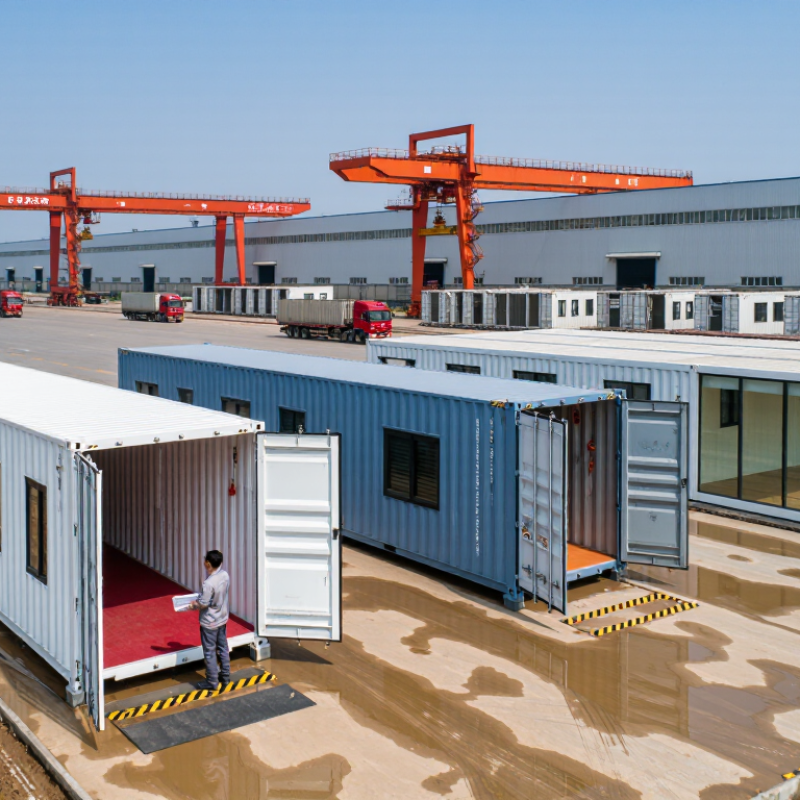
Table of Contents
[Hide]
Understanding Custom-Built Containers and Their Applications
A custom-built container is designed around a specific load, site, or workflow, rather than a standard shipping format. In China, buyers may commission units for workshops, mobile offices, equipment shelters, storage rooms, or temperature-sensitive operations. The use determines the details. A workshop may need wide doors, task lighting, and a reinforced floor, while an equipment shelter may require cable entries, ventilation, and weather seals.
Start with the actual operating conditions: dimensions, payload, lifting points, wind exposure, humidity, and access for maintenance. Small omissions matter. A door that clears the drawing but hits nearby machinery can disrupt daily work. For coastal or wet locations, ask how steel surfaces, seams, and fittings are protected against corrosion. Insulation also needs to match the climate and equipment heat output; thicker panels alone do not guarantee stable temperatures. Check drawings, material specifications, weld inspection records, and finish details before production. If the design is unfamiliar, a sample section or prototype can reveal practical issues early.
Applications often change after installation, and that deserves honest attention. A container planned for storage might later become a staffed workspace, bringing new needs for lighting, ventilation, and safe access. I would leave room for likely changes, but not add features without purpose. More fittings can mean more maintenance. Clear specifications, realistic site measurements, and documented inspection steps make a custom unit easier to evaluate than attractive renderings alone.
How to Choose Top Custom Built Containers in China? - Understanding Custom-Built Containers and Their Applications
| Container solution | Typical configuration | Common applications | Key selection checks |
|---|---|---|---|
| Standard dry container | Enclosed steel unit, commonly available in 20-foot and 40-foot lengths. Typical nominal external dimensions are approximately 6.06 × 2.44 × 2.59 m for 20-foot units and 12.19 × 2.44 × 2.59 m for 40-foot units. | General cargo, packaged goods, tools, and storage. | Confirm usable internal dimensions, payload, door opening, floor condition, and whether the unit is intended for shipping or stationary use. |
| High-cube container | A taller dry container, commonly about 2.90 m in nominal external height; available lengths and actual dimensions vary by specification. | Lightweight, bulky cargo; equipment with extra clearance; storage requiring greater interior volume. | Check route and site height limits, loading access, and the supplier’s exact internal height and maximum gross weight. |
| Refrigerated container | Insulated enclosure with a refrigeration unit, electrical connection, and airflow features. Temperature capability depends on the specific equipment and operating conditions. | Temperature-controlled food, pharmaceuticals, and other goods requiring a managed environment. | Specify the required temperature range, power supply, ventilation, monitoring, service access, and any applicable cargo or regulatory requirements. |
| Open-top container | Container with a removable or retractable roof cover, designed to allow loading from above; exact construction varies by model. | Tall or awkward cargo that is loaded by crane, such as machinery or certain building materials. | Check the loading method, cargo height, lashing points, weather protection, and any restrictions on the cargo’s weight or dimensions. |
| Flat-rack container | Cargo platform with end walls that may be fixed or collapsible; sides and roof are generally open. | Oversized or heavy cargo, including vehicles, industrial equipment, and large components. | Confirm payload, cargo footprint, center of gravity, securing points, lifting plan, and transport rules for out-of-gauge loads. |
| Side-door container | Dry-container layout modified with additional side access; door arrangement and opening size are project-specific. | Storage areas, workshops, and operations that need access along the container’s side. | Review door clearances, structural reinforcement, weather sealing, security hardware, and access space at the installation site. |
| Converted site office or modular unit | A container or modular steel structure adapted with features such as insulation, windows, doors, lighting, or interior finishes. | Temporary offices, site accommodation, security rooms, and utility spaces, subject to local approvals and building requirements. | Define occupancy, insulation and ventilation needs, electrical systems, fire safety, foundations, lifting points, and local permitting requirements. |
Dimensions are typical nominal figures, not guaranteed usable interior measurements. Before ordering, confirm the final drawings, materials, payload, applicable transport or building standards, inspection scope, delivery conditions, and project-specific requirements with the supplier.
Related Posts
-
2026 Top Custom Built Shipping Containers for Global Buyers
-
China Best Custom Built Containers Supplier?
-
Custom Made Containers for Your Unique Shipping Needs?
-
How to Choose Custom Built Shipping Containers in 2026?
-

Top Custom Sea Containers for Global Buyers in 2026?
-
2026 How to Customize Your Own Shipping Containers for Unique Needs?

© 2023 Integrated Modular Solutions. All Rights Reserved