Finding reliable transportable container homes in China starts with matching a supplier to your intended use and delivery plan. The right supplier should explain frame materials, insulation, wiring, plumbing, and transport dimensions in plain terms. Buyers can compare direct manufacturers, established export suppliers, and business-to-business marketplaces. A polished catalog is not proof of production capacity. Ask for recent factory photos, product specifications, warranty terms, and references for similar projects. Request drawings that show door positions, window sizes, lifting points, and connection details. Small details matter.
Before paying a deposit, confirm what the quoted price includes, from packing to inland delivery and port handling. Check whether the home meets destination requirements for electrical systems, fire performance, and structural use; verify claims with documentation. For overseas buyers, freight methods and container dimensions can significantly affect the final cost. Clarify who handles customs paperwork and who bears costs if specifications differ from approved drawings. Do not rely on photos alone. Prices vary with insulation, finishes, fittings, and order volume, so the lowest quote may omit essential work. A video call or independent inspection can help, though neither removes every risk. No supplier is perfect. This guide explores practical ways to shortlist Chinese suppliers, assess build quality, and compare quotations with clearer expectations. It also highlights questions to ask before choosing a factory or placing an order.
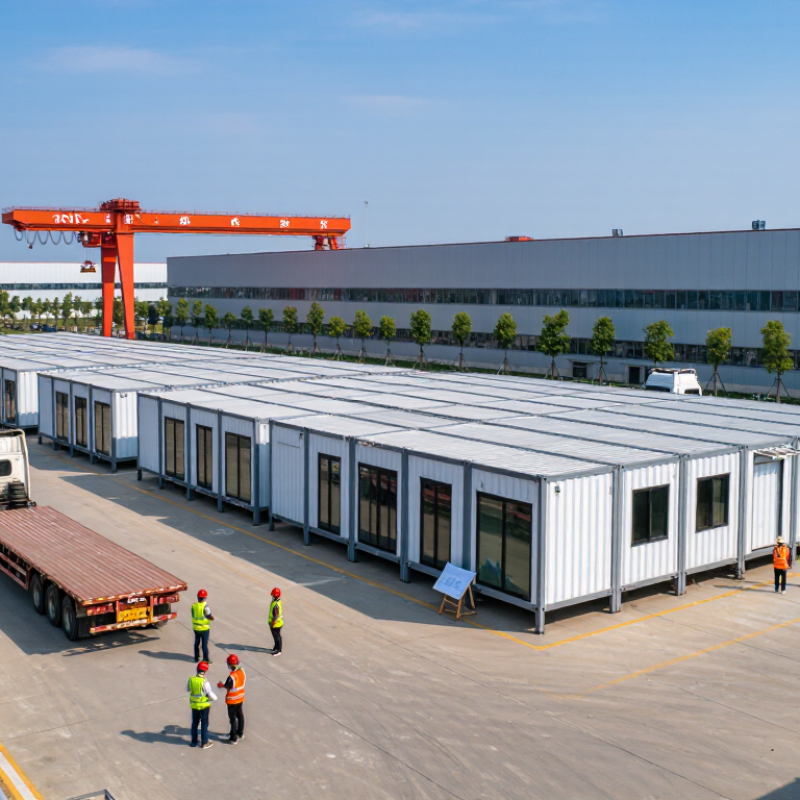
Transportable container homes are factory-fitted units designed to move by truck, ship, or crane. Some reuse steel shipping containers; others use purpose-built modular frames. They can serve as site offices, temporary classrooms, compact guest rooms, or remote worker accommodation. A unit is not automatically ready to live in. It still needs safe foundations, insulation, ventilation, plumbing, and electrical connections. Details matter.
McKinsey’s 2019 report on modular construction estimated that off-site methods could cut project timelines by 20–50% and costs by up to 20%. Those figures cover modular construction broadly, not every container home. UNCTAD reported 858.5 million TEUs of global container-port throughput in 2022, showing the scale of container logistics—not the supply of suitable housing units. On site, check door clearances, crane access, drainage, and how heat moves through the walls. A sunlit steel box can become uncomfortable quickly. Moving it later may also require disconnection work and another transport plan. That distinction is easy to overlook.
Transportable container homes are prefabricated units designed to be moved and installed at a site. The chart compares the estimated external floor footprints of common ISO container sizes; actual usable interior area is smaller because of wall thickness and fittings. These units are used for temporary accommodation, site offices, classrooms, and other modular spaces.
China’s container-home manufacturers are concentrated around coastal manufacturing and export corridors, rather than evenly across the country. In Guangdong, buyers often find modular-building workshops near Foshan, Guangzhou, and Shenzhen, supported by metalworking, interior-fit-out, and port services. Jiangsu and neighboring Shanghai offer another sourcing belt, with suppliers around Suzhou and Nantong. Further north, Shandong and Hebei have established steel-processing industries. These are useful search areas, not a verified directory of factories.
Logistics help explain the pattern. China’s Ministry of Transport reported 310.34 million TEUs of container throughput at the country’s ports in 2023, in its Statistical Bulletin on Transport Industry Development. The World Steel Association’s World Steel in Figures 2024 reports that China produced 1,019.1 million tonnes of crude steel in 2023. These figures indicate substantial material and shipping capacity, but do not prove a supplier’s quality. That matters. Ask for the workshop address, recent production photos, material specifications, and an itemized quotation. I would not treat a city listing as proof of manufacturing capacity; some suppliers use offices or trading teams far from their actual workshops.
The locations below are practical areas to include in a supplier search, not a verified ranking of container-home factories. Regional industrial activity and nearby ports can help with sourcing and shipping, but do not establish the quality or availability of any individual supplier.
| Area to Explore | Relevant Industrial Context | Transportable Housing Products to Ask About | Nearby Port or Freight Consideration | Useful Buyer Checks |
|---|---|---|---|---|
| Guangdong Foshan, Dongguan, and Guangzhou |
A broad manufacturing region with suppliers across metal fabrication, building materials, and equipment. These capabilities may support modular building production, but factory experience should be checked directly. | Flat-pack modular units, expandable units, site offices, and prefabricated accommodation modules. | Guangzhou and Shenzhen provide major port options in the province. Confirm the actual loading port and inland transport costs for the factory location. | Request factory details, structural drawings, material specifications, packing dimensions, and evidence of completed projects. |
| Jiangsu Suzhou, Changzhou, and Nantong |
A manufacturing-intensive province with engineering, machinery, and construction-related supply chains. Compare suppliers by their documented modular-building experience rather than location alone. | Modular cabins, prefabricated accommodation blocks, container-style offices, and multi-unit configurations. | Shanghai is a major export gateway for the region; the most suitable port depends on the factory, cargo dimensions, and shipping route. | Check whether the quoted product is shipped assembled or in components, and request a full bill of materials and installation instructions. |
| Shandong Qingdao and Weifang |
The province has substantial industrial and equipment-manufacturing activity. Ask suppliers to specify which structural components and fabrication processes are completed in-house. | Steel-frame modular buildings, temporary accommodation units, site facilities, and customized portable buildings. | Qingdao Port can be a relevant export option for suppliers in the region. Confirm container availability, cargo handling requirements, and inland haulage. | Check steel grades, corrosion protection, wind-load assumptions, roof and wall specifications, and the destination building-code requirements. |
| Zhejiang Hangzhou and Ningbo |
A developed manufacturing and export-oriented region. Supplier capabilities vary, so verify whether the company manufactures the complete unit or coordinates production through subcontractors. | Flat-pack cabins, modular rooms, prefabricated site buildings, and transportable accommodation modules. | Ningbo-Zhoushan Port is a major port option in Zhejiang. Shipping suitability depends on the product’s packed size, weight, and destination. | Request packing lists, lifting-point details, assembly time estimates, warranty terms, and spare-parts arrangements. |
| Hebei Tangshan and Cangzhou |
Parts of Hebei have significant steel and metalworking industries. This may be relevant to frame sourcing, but it is not a substitute for checking a building manufacturer’s design and quality controls. | Steel-frame portable buildings, modular site accommodation, storage units, and project-specific prefabricated modules. | Tianjin Port may serve some Hebei suppliers. Compare the full inland and port-handling costs with alternative shipping routes. | Verify structural calculations, welding and inspection procedures, insulation performance, fire-safety specifications, and export documentation. |
| All sourcing areas Supplier due diligence |
Transportable container-style homes differ in frame design, insulation, finishes, and whether they are built from new materials or modified shipping containers. | Compare flat-pack, fold-out, expandable, and fully assembled designs against the intended use and site conditions. | Oversized or assembled units may require special transport, permits, or different cargo arrangements. Obtain packed dimensions and gross weight before requesting a freight quote. | Confirm local permits and building codes, product tests and certificates, payment milestones, inspection rights, delivery scope, and after-sales support in writing. |
When comparing transportable container-home suppliers in China, look beyond the catalogue photos. Ask for dimensioned drawings, a detailed materials list, and dated factory inspection records. Check steel profiles, weld finish, corrosion protection, insulation thickness, and how roof joints shed water. Small details matter: a poorly sealed corner can leak after repeated transport. Request a finished sample or inspect a completed unit, if practical.
Compare designs against the destination climate and actual use. A home for humid coastal weather needs different ventilation and corrosion protection from one used in a cold, dry region. Confirm lifting points, transport dimensions, utility connections, and whether interior fittings can be repaired locally.
McKinsey’s 2019 report, “Modular construction: From projects to products,” says modular methods can shorten schedules by 20–50% and reduce costs by up to 20%. Those figures cover modular construction broadly, not container homes alone, and should not be treated as supplier guarantees.
Ask how quality is checked at each production stage, and request relevant test reports from independent laboratories. Compare the same specifications across quotations; vague terms such as “premium insulation” are hard to verify. A polished render proves little. I would also ask what the supplier would change after a year of real use. The answer may be imperfect, but a specific answer is more useful than a promise.
When comparing transportable container homes in China, verify documents against the exact model you plan to order. Ask for the manufacturer’s legal name, certificate number, issuing body, validity dates, and covered standards. Confirm these details with the issuing organization through contact information you find independently. A certificate for one configuration may not cover another. Changes to insulation, wiring, or windows can matter. Check whether the documents address requirements in your destination market. Paperwork can look polished; that alone proves little.
Read the contract beside the technical drawings. It should specify dimensions, materials, insulation thickness, electrical fittings, delivery terms, inspection stages, warranty coverage, and remedies for defects. Keep agreed specifications in the signed contract, not only in chat messages. Verify the company’s registration and business scope through an official registry, then compare its registered address with the proposed factory. Ask for a live video tour showing fabrication, quality checks, and packed units. If practical, arrange an independent inspection before final payment. A video call can miss details; I would not treat it as a substitute for an on-site check.
Where to Buy Top Transportable Container Homes in China?
A reliable purchase starts with a written, itemized quote, not a low headline price. Ask the supplier to specify the home’s dimensions, gross weight, materials, insulation, and included fittings. Also request current production time and quote validity. Shipping prices can shift quickly. UNCTAD’s Review of Maritime Transport 2024 reported a 122% rise in the Shanghai Containerized Freight Index between December 2023 and June 2024. This index tracks spot container rates; it is not a direct quote for your shipment. Still, it shows why a freight estimate needs a date and a clear route.
For shipping, confirm the departure and destination ports, loading method, and delivery terms in writing. Check whether the quote includes port handling, customs-related charges, inland trucking, unloading, and insurance. A container home may need special lifting arrangements, so share its packed dimensions and weight with the forwarder before booking. Small omissions hurt. For installation, confirm who prepares the foundation, connects utilities, and supplies a crane or local crew. Ask for drawings and installation instructions before production ends. I would still leave room in the budget for site adjustments; even careful plans can miss a sloped driveway or an unexpected crane-access limit. Have a qualified local professional check the foundation and site conditions before delivery.