
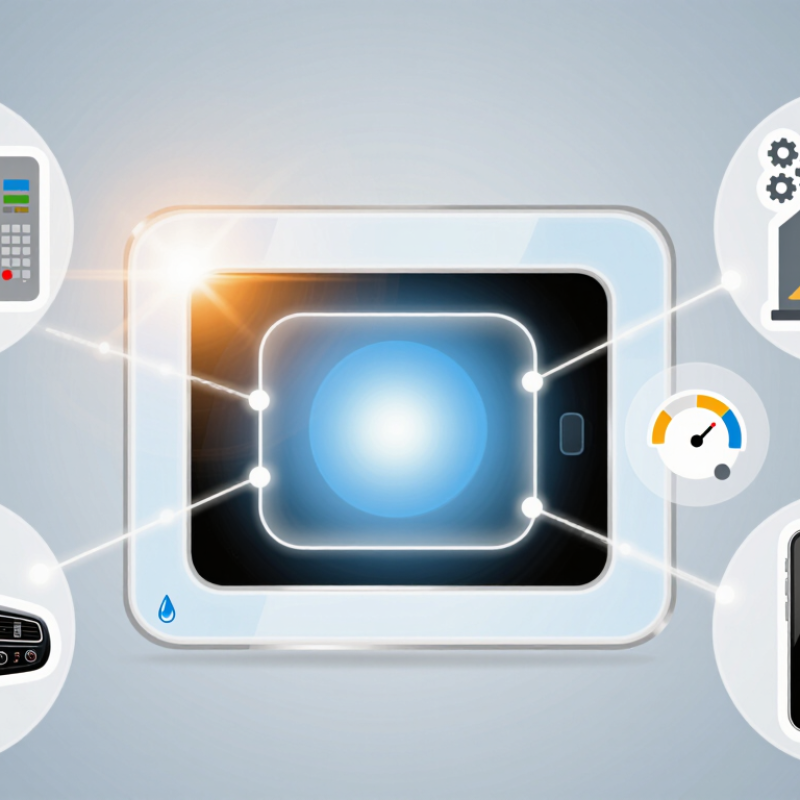
An embedded display is a screen designed into a product’s structure, electronics, and software. Unlike an external monitor, it shares the device’s power, processor, enclosure, and user interface. A typical architecture includes a display panel, timing controller, backlight, touch sensor, operating system, and application layer. Engineers must also plan heat paths, sealing, viewing angles, and service access.
Interfaces determine how these parts communicate. MIPI DSI suits compact products because it uses fewer conductors and supports high-speed video. LVDS remains useful for longer internal connections and larger panels. HDMI or DisplayPort may simplify development, but they often consume more space and power. USB can carry touch data, while I2C or SPI commonly connects sensors and control components. The choice is rarely perfect.
The market is expanding with connected equipment. IoT Analytics reported 16.6 billion connected IoT devices worldwide in 2023, creating more demand for local visual feedback. MarketsandMarkets projects the global human-machine interface market to grow from about 5.0 billion dollars in 2023 to 7.6 billion dollars by 2028. Practical use cases include medical monitors, factory controllers, vehicle consoles, laboratory instruments, and smart energy meters.
In a factory, a bright display can show an alarm beside a physical stop switch. In a medical device, readable status information matters more than decorative graphics. Designers sometimes underestimate glare, gloves, dust, and awkward viewing positions. Testing only in a quiet laboratory is not enough.