
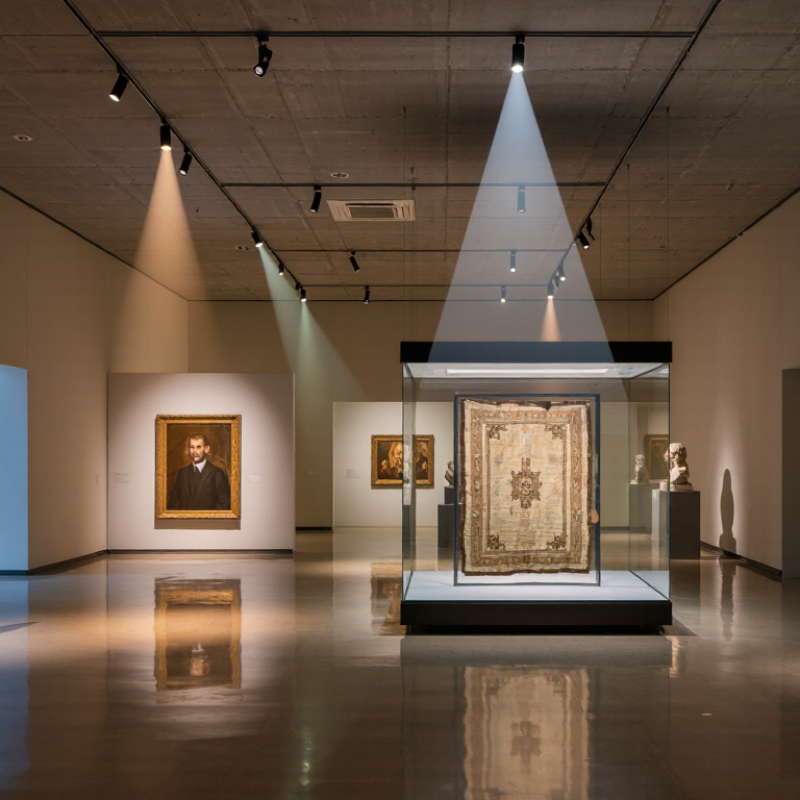
Museum lighting should protect objects even when galleries are open. The Canadian Conservation Institute recommends about 50 lux for highly light-sensitive materials, such as watercolours and textiles, and 150 lux for moderately sensitive objects. These are illuminance levels, not guarantees of safety. The CIE’s 157:2004 report explains why cumulative exposure matters: damage builds with the light received over time, often tracked in lux-hours.
Dimming helps keep light near the level needed to view an object. Timers can switch off display lighting outside visiting hours, while occupancy sensors can shorten unnecessary exposure. For example, a textile case might remain dim when a gallery is empty, then brighten modestly when visitors approach. Staff should check settings and record operating hours; a timer left on manual mode can quietly undo the plan. Small details matter.
Rotation gives vulnerable works scheduled rest in dark, controlled storage. It does not reverse fading already caused, and it is not a cure. A rotation schedule should reflect each object’s sensitivity and past exposure, rather than treating every work alike. The CCI’s lux guidance is useful, but actual conditions vary across a case: measure near the object, not only at the doorway. Even careful controls need review. A sunlit patch can shift with the season.