
Choosing a battery storage system in 2026 starts with the duty cycle, not cell chemistry.
Lithium iron phosphate batteries suit daily solar shifting, backup, and commercial peak shaving. They provide strong thermal stability, long cycle life, and competitive costs.
Nickel-manganese-cobalt batteries save space when energy density matters. However, they require stricter thermal controls and operating discipline.
The International Energy Agency’s Batteries and Secure Energy Transitions report recorded nearly 42 GW of new battery storage in 2023, almost triple the previous year. Scale is growing quickly. It does not remove design risk.
For homes, compare usable capacity, outage duration, noise, installation space, and warranty throughput. A 10-kWh battery may cover evening loads, but not a heat pump and electric vehicle overnight.
Factories need power rating, response time, tariff structure, and cycling limits. LFP is often practical here.
Yet short, sharp peaks may require more power than energy. Oversizing can waste capital.
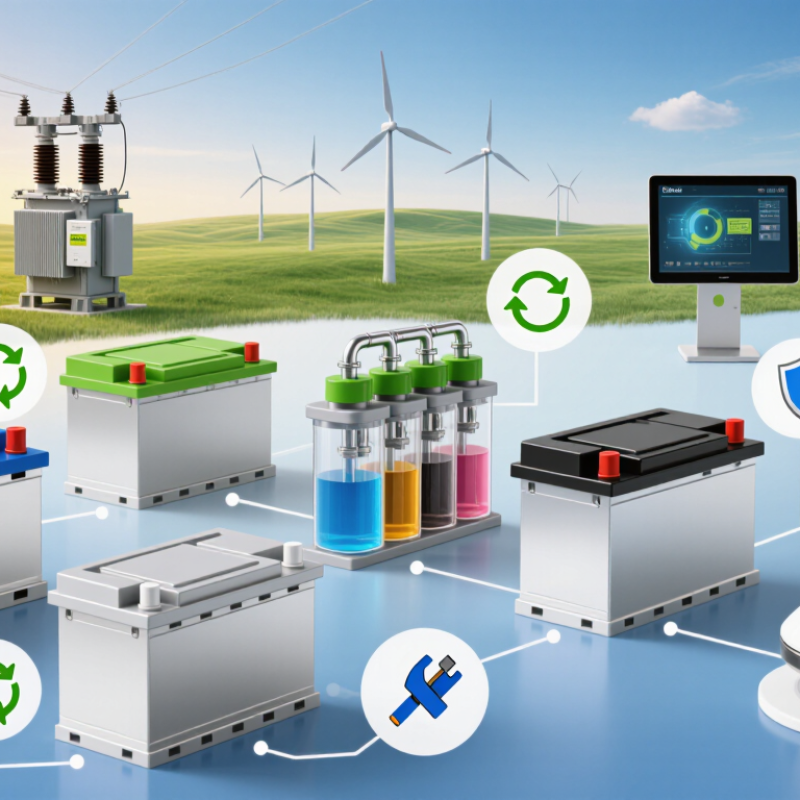
For eight-hour or longer applications, flow batteries and sodium-ion systems deserve evaluation. Flow batteries separate power from energy, making larger tanks useful for extended discharge. Sodium-ion chemistry may reduce dependence on certain critical minerals, though maturity and energy density remain uneven.
The U.S. Department of Energy’s Long Duration Storage Shot targets a 90% cost reduction for 10-plus-hour systems by 2030.
Utility projects also need grid studies, interconnection limits, fire protection, land, and revenue stacking. Round-trip efficiency alone can mislead.
I would model degradation, cold-weather performance, auxiliary loads, and replacement timing before choosing. Real projects are messier than datasheets.