
How to Choose the Best Industrial Drone for Your Business?

Choosing an Industrial Drone is less about buying the most advanced aircraft and more about solving a specific business problem. Will it inspect a wind turbine, map a quarry, or monitor crops across uneven fields? Each task changes the requirements. A camera that captures sharp thermal images may matter more than flight speed. A mining operation may value dust resistance, stable positioning, and dependable battery swaps. Details like these shape the real cost of ownership.

Drone industry analyst Colin Snow’s work offers a useful selection principle: “Start with the operational need, then choose the aircraft.” Treat this as a practical paraphrase, not a verbatim quotation. It points buyers toward measurable questions: What payload is required? How long must the drone stay airborne? Can staff process its data with existing software? A polished product sheet cannot answer every question. A short, supervised field test often reveals more—especially when wind rises or a landing area proves smaller than expected.

No choice is perfect. A longer flight time can mean a heavier aircraft, while a lower upfront price may bring extra training or maintenance costs. That trade-off deserves attention. Compare total ownership costs, operator support, repair access, data quality, and integration needs before committing. Ask vendors for evidence from work similar to yours, not only dramatic demonstration footage. And be honest about uncertainty: your first estimate of flight hours or staffing needs may be wrong. A careful trial can expose that early. This guide explores the criteria that help businesses choose an Industrial Drone suited to their work, their teams, and the conditions they actually face.
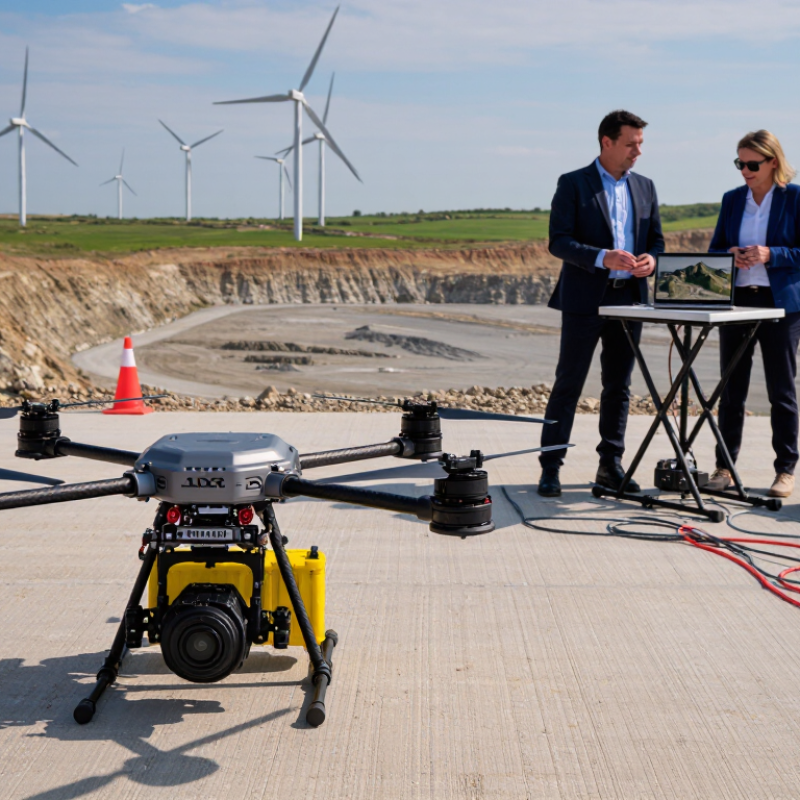
How to Choose the Best Industrial Drone for Your Business?

Define Your Business Needs and Mission Requirements

Choosing an industrial drone begins with the work it must perform, not its advertised range. Start with the job. Will it inspect a rooftop, map a stockyard, monitor crops, or carry a sensor along a fixed route? Each mission changes the useful payload, camera type, flight time, and data quality. Write down site dimensions, typical wind, temperature, launch surfaces, and obstacles such as cranes or power lines. Measure the site. A drone that covers a large area on paper may need extra battery changes in real conditions.

Define the result you need before comparing aircraft. For inspection, note whether images must show hairline cracks, corroded bolts, or broad heat patterns; this determines resolution and sensor needs. For mapping, specify ground detail and how often the model must be updated. Include time to set up, transfer files, review findings, and train staff. These steps are often overlooked. Estimate a full work cycle, not just flight minutes, and keep a practical reserve for wind, cold, and battery aging. Check whether maintenance, spare parts, batteries, and secure data storage fit your workflow. Early estimates are rarely perfect; revisit them after a few representative site visits. A simple mission checklist can reveal mismatches before purchase.

Compare Industrial Drone Types and Operating Capabilities

How to Choose the Best Industrial Drone for Your Business?

Compare Industrial Drone Types and Operating Capabilities

Industrial drone types suit different jobs. Multirotor aircraft can hover beside a tank, bridge joint, or rooftop and capture close inspection images. They need relatively small launch areas, but limited flight time can restrict coverage, especially with heavy sensors. Fixed-wing drones cover long routes efficiently, making them useful for pipelines, farmland, or power corridors. However, they need suitable takeoff and landing space and cannot hover over a small defect. Hybrid vertical-takeoff models combine these strengths, though their added complexity may require more training and maintenance.

Compare real operating capabilities, not just advertised range. A thermal camera can help identify temperature differences, while LiDAR can map complex structures; each adds payload weight and data-processing demands. Ask how wind, cold, dust, and signal interruptions affect usable flight time. A drone that flies far on paper may be a poor fit for a site with frequent launch stops. That detail is easy to overlook.

Evaluate Payload, Flight Time, Range, and Data Quality

An industrial drone should fit the work, not just the spec sheet. The FAA’s 2024–2044 Aerospace Forecast estimates roughly 1.1 million commercial small drones in the United States in 2023, with a base-case projection near 1.5 million by 2028. As use grows, matching aircraft capability to the task matters. Start with payload: include the camera, thermal sensor, mount, and any protective housing in the total weight. Then check flight time with that load attached, not the lighter configuration used in ideal demonstrations.

Plan for real conditions. Wind, cold, frequent climbs, and battery aging can shorten missions, so leave a practical reserve instead of planning around maximum endurance. Range figures also need scrutiny: radio-link range is not the same as a safe, useful operating radius around a worksite. A common procurement mistake is buying extra range while overlooking whether one battery can cover the actual inspection route. Easy to miss.

Data quality determines whether a flight produces usable evidence. Ask for ground sample distance, image overlap, georeferencing method, and repeatability across missions. For mapping, the ASPRS Positional Accuracy Standards for Digital Geospatial Data (2024) evaluate positional accuracy using measures such as root mean square error, not vague “high-resolution” claims. For thermal work, check calibration and whether readings remain consistent across the planned operating conditions. More pixels help, but they do not fix poor focus or weak positioning. That part deserves a careful test.

How to Choose an Industrial Drone

Compare typical planning envelopes for payload, flight time, operating range, and image detail. These illustrative ranges vary by aircraft, payload, weather, and operating rules.

Payload

Typical planning envelope: 1–5 kg

Flight Time

Typical planning envelope: 25–45 min

Operating Range

Typical planning envelope: 3–10 km

Image Detail (GSD)

Illustrative mapping range: 1–5 cm/px

Choose a payload with capacity to spare, and check flight time under your expected load. Confirm that the required operating range is permitted and supported by the command link. For image detail, a lower ground sampling distance (GSD) means finer spatial detail; verify it at your planned altitude and camera settings.

Check Safety, Regulatory, and Integration Requirements

How to Choose the Best Industrial Drone for Your Business?

Before comparing flight time or payload, define where and how the drone will operate. A warehouse inspection, a construction survey, and an outdoor utility check create different safety demands. Check obstacle detection, emergency landing behavior, battery handling, and the operator’s view of the work area. Ask staff to walk through a real task, including what happens when wind rises or a sensor gives an unclear reading. Small details matter. A landing zone beside a loading bay may be a poor choice during shift changes.

Regulatory requirements vary by location and operation. Confirm current aviation rules, site permissions, operator training, and recordkeeping expectations with the relevant authorities before purchase. Keep operating limits and inspection logs easy for crews to find. Paperwork can feel tedious, but uncertainty on site is worse. Integration deserves the same scrutiny: check whether flight data can move into your mapping, maintenance, or asset-management systems in usable formats. Review access controls and data retention, too. Run a limited trial with the people who will actually use the equipment. Their feedback may expose awkward controls or workflow gaps that a neat specification sheet misses. No checklist catches everything. Leave room to revise the plan.

Assess Total Ownership Costs and Vendor Support

An industrial drone’s purchase price is only the starting point. Estimate battery replacement, spare propellers, charging equipment, software fees, operator training, and routine inspections. A battery that lasts fewer flights than expected can change the budget quickly. Small costs add up. Include staff time and likely downtime when comparing models, not just the invoice.

Tips: Ask vendors for a written, itemized ownership estimate covering at least three years. Request typical repair turnaround times, parts availability, and clear support hours. If possible, test the aircraft on your site with your actual payload. Ask for proof, not only a polished demonstration.

Vendor support matters most when a mission is delayed and a component needs attention. Check whether onboarding includes practical flight planning and maintenance guidance. Find out how support handles troubleshooting, software updates, and warranty claims. Speak with current users who perform similar work, and ask what response times they actually experience. A low-cost package may still suit a small team, but limited support can leave equipment idle. I would not assume every quoted service will be useful; confirm what your staff can realistically use before paying for it.

How to Choose the Best Industrial Drone for Your Business? — Assess Total Ownership Costs and Vendor Support

Compare aircraft by the work they must perform, then evaluate the full cost of operating them—not just the purchase price. Flight times below are broad planning ranges; actual results depend on payload, weather, battery condition, and flight profile.

Platform type Typical operating profile Main cost factors to include Vendor support to verify Best fit and key trade-off
Multirotor Vertical takeoff and landing; commonly used for close inspection, construction documentation, and localized mapping. Many models offer roughly 20–45 minutes of flight time per battery, depending on configuration and conditions. Aircraft and sensor purchase; spare batteries; charging equipment; replacement propellers; inspection and repair; software; pilot training; insurance; and downtime between flights. Confirm repair location, typical turnaround time, spare-parts availability, warranty coverage, software-update policy, training options, and access to technical troubleshooting. A practical choice for precise, short-range work and sites with limited launch space. Shorter endurance can mean more battery changes and flight cycles on larger sites.
Fixed-wing Efficient forward flight for covering larger areas; generally requires a suitable launch and recovery area. Endurance varies substantially by aircraft and payload, so compare tested mission duration rather than headline maximum flight time. Airframe and mapping sensor; launch and recovery equipment; batteries; data-processing software; transport; maintenance; training; and any additional staff or equipment needed for field operations. Check support for flight planning and data workflows, airframe repairs, sensor calibration, operator onboarding, and software compatibility with your existing systems. Suitable for recurring surveys over broad, accessible areas. It is less convenient where frequent hovering, confined-space operation, or vertical takeoff is required.
VTOL fixed-wing Combines vertical takeoff and landing with efficient forward flight. Often considered for corridor inspections and larger sites where a runway is unavailable; endurance and payload depend on the design and mission setup. Aircraft, payloads, batteries, transition-system maintenance, training, mapping or inspection software, transport, repairs, and the cost of keeping specialized parts available. Ask whether technicians can service both VTOL and fixed-wing components, what parts are stocked, how repairs are handled, and whether mission-planning support is included. Useful when a site needs broad-area coverage without a runway. The hybrid design may add operational complexity and maintenance requirements compared with a simpler platform.
Heavy-lift multirotor Designed to carry heavier or specialized payloads, such as certain inspection instruments or delivery equipment. Payload capacity reduces available flight time and must be checked against the complete mission configuration. Aircraft and payload integration; high-capacity batteries; charging and transport equipment; additional maintenance; specialist training; regulatory compliance; and any ground crew required. Verify payload-integration assistance, documented operating limits, repair capability, parts lead times, and support for safety procedures and regulatory documentation. Consider when the payload is essential to the work. A higher payload rating alone does not guarantee longer flight time or lower cost per completed task.
Total ownership cost over your evaluation period = purchase and payload costs + batteries and consumables + software and data services + training + maintenance and repairs + insurance and compliance costs + labor and travel + downtime costs − expected resale value.
Before buying: request a written, itemized quote; compare the cost per completed mission; test the intended payload and workflow; and agree on support response times, repair turnaround targets, warranty exclusions, parts availability, and training deliverables. Treat vendor service targets as contract terms to confirm, not assumptions.

Planning note: Flight-time ranges and operating characteristics are indicative, not guaranteed specifications. Confirm current manufacturer documentation and local aviation requirements for the exact aircraft, payload, and operating location.