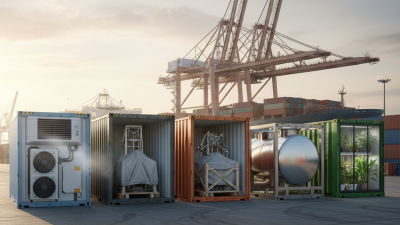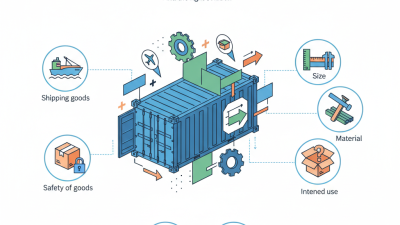
In the rapidly evolving world of logistics, the demand for custom cargo containers has surged. According to a report by the United Nations Conference on Trade and Development (UNCTAD), global container shipping volume increased by 4.4% in 2021, highlighting the need for specialized solutions. These containers cater to diverse shipping requirements across various industries, ensuring safe and efficient transportation of goods.
Custom cargo containers offer numerous advantages. They can be designed to meet specific dimensions or functional needs, improving space utilization. For instance, temperature-controlled containers are crucial for transporting perishable goods, impacting food safety and reducing spoilage. Each industry faces unique challenges, and standard containers may fall short.
However, the focus on customization raises concerns. Manufacturers must balance costs and production speed with quality. Poorly designed containers could lead to cargo damage or inefficiency. This ongoing challenge emphasizes the need for continuous innovation and improvement in the custom cargo container sector. Understanding these dynamics can help companies streamline their logistics operations effectively.
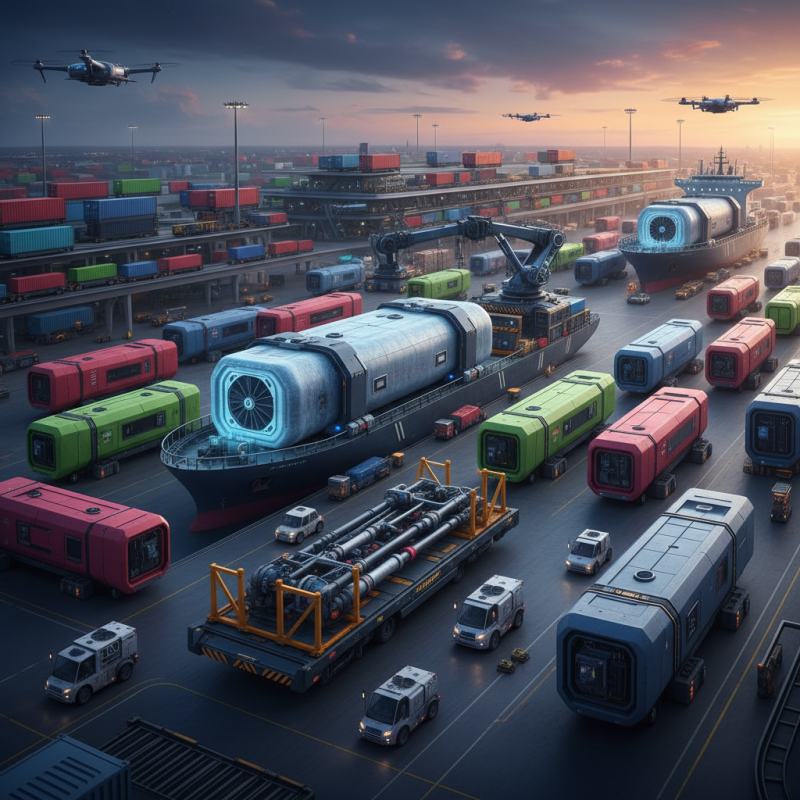
Custom cargo containers are essential in global shipping. Their design can be tailored to meet various needs. This includes transporting perishable goods, oversized items, and fragile materials. Understanding custom cargo containers helps businesses enhance their shipping strategies.
Select the right container for specific goods. Consider factors like size, durability, and insulation. This ensures the safety of the cargo during transit. Containers can also be equipped with technology for tracking and monitoring. This adds an additional layer of security.
Tips: Always measure your goods before choosing a container. This prevents unexpected shipping costs. Additionally, review the container's specifications for weight limits. An overloaded container can lead to delays and fines. Custom cargo containers should cater to both your shipping requirements and budget constraints.
| Container Type | Dimensions (ft) | Weight Capacity (lbs) | Material | Common Uses |
|---|---|---|---|---|
| Standard Dry Container | 20 x 8 x 8.5 | 44,000 | Steel | General cargo, machinery |
| Refrigerated Container | 40 x 8 x 8.5 | 50,000 | Steel | Perishable goods, pharmaceuticals |
| Open Top Container | 40 x 8 x 8.5 | 50,000 | Steel | Bulky cargo, heavy equipment |
| Flat Rack Container | 40 x 8 x 8.5 | 60,000 | Steel | Vehicles, large machinery |
| Tank Container | 20 x 8 x 8.5 | 26,000 | Stainless Steel | Liquid chemicals, food products |
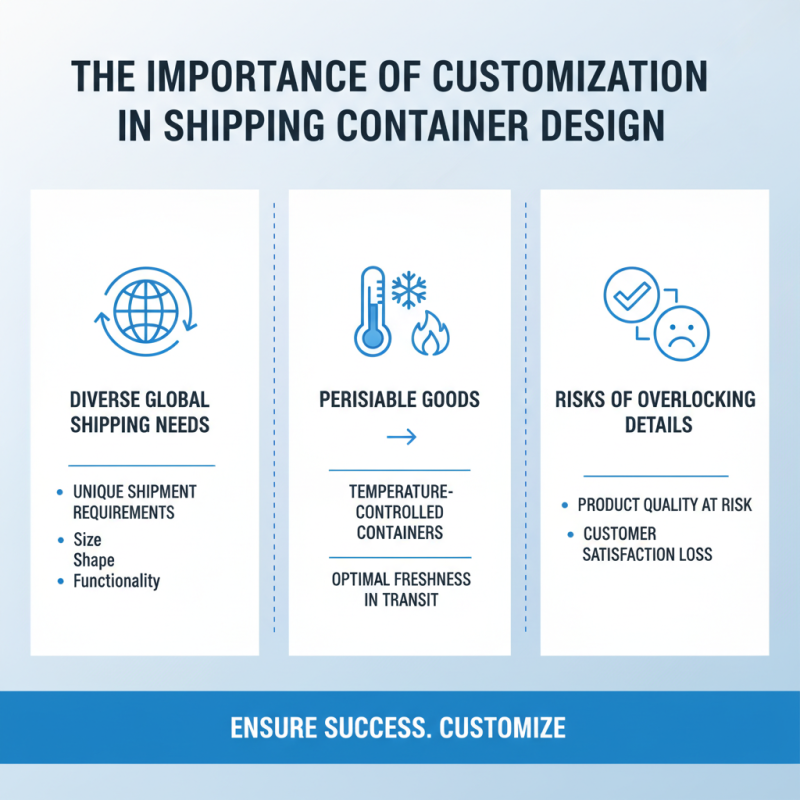
Customization in shipping container design is vital for meeting diverse global shipping needs. Each shipment has unique requirements, such as size, shape, and functionality. For instance, perishable goods demand temperature-controlled containers. This ensures optimal conditions for freshness during transit. Companies often overlook these details, risking product quality and customer satisfaction.
Additionally, customized containers enhance security. Standard containers may lack features needed to protect valuable cargo. Tailored designs can include reinforced locks and better sealing systems. This is crucial for high-value shipments. Yet, many businesses are hesitant to invest in custom solutions, fearing higher costs. They miss the potential long-term benefits, such as reduced loss and damage.
Lastly, specific industries require specialized containers for compliance. For instance, pharmaceuticals must adhere to strict regulations. Failing to customize containers for these needs can lead to severe repercussions. The temptation to choose the cheapest option often backfires. Investing in tailored designs promotes reliability and trust in global shipping practices.
Custom cargo containers are essential for various industries. They offer flexibility and adaptability to meet specific shipping needs. In the food industry, refrigerated containers can maintain optimal temperatures. These containers ensure that perishable goods reach their destination fresh.
For the automotive sector, specialized containers designed for vehicle transport provide secure and efficient solutions. Each container type caters to unique requirements in shipping.
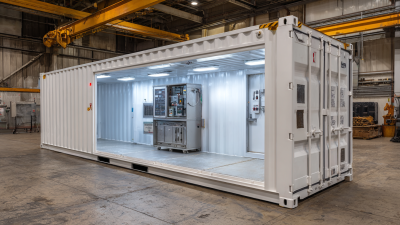
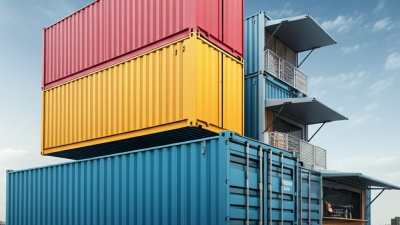
In construction, custom containers serve as mobile offices or storage units. These versatile units can be modified to fit different job sites. The logistics industry also benefits from custom-designed containers. They streamline operations and enhance efficiency. However, the challenge lies in ensuring containers meet all safety and regulatory standards. Regular inspections are crucial to maintaining reliability.
Customization can add complexity. Businesses must weigh the benefits against potential challenges. Cost is another consideration. Investing in specialized containers may seem expensive upfront. Yet, the long-term advantages often outweigh initial costs. Finding the right balance requires careful thought and planning in any project.
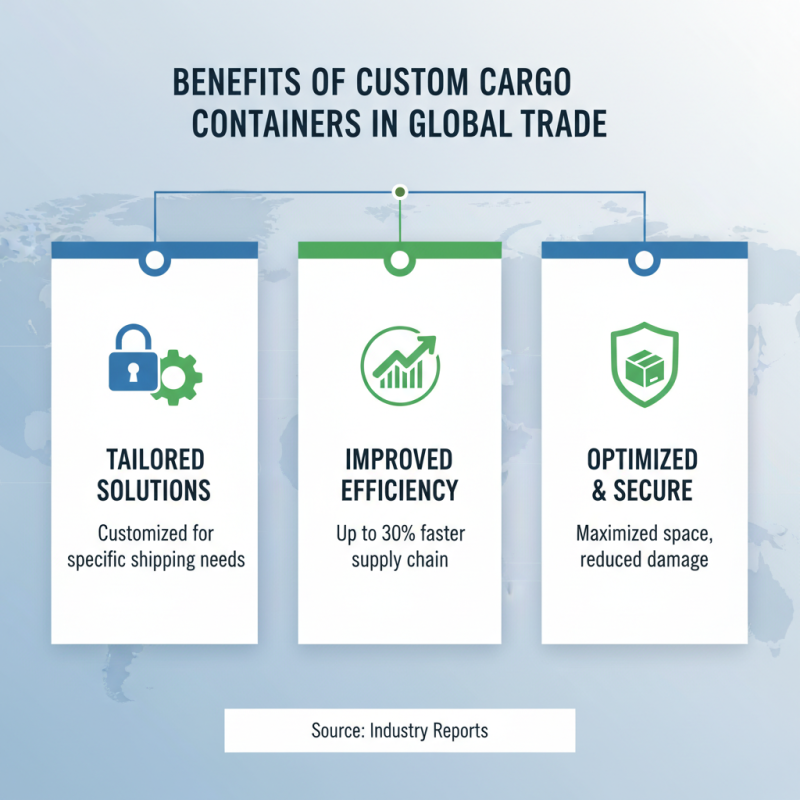
Custom cargo containers play a crucial role in global trade. They provide tailored solutions for various shipping needs. Recent industry reports indicate that customized containers can improve supply chain efficiency by up to 30%. This efficiency stems from their ability to optimize space and reduce damage during transit.
Incorporating advanced materials, custom containers can also enhance durability. They withstand harsher conditions and provide greater protection for goods. According to a study by the International Maritime Organization, over 20% of cargo damage occurs due to inadequate container design. Custom solutions can mitigate this risk, thus enhancing the overall reliability of shipping operations.
However, the importance of a one-size-fits-all approach in container design cannot be overlooked. There are still challenges, such as cost implications and longer lead times for custom containers. Businesses must weigh these factors carefully. Overall, investing in custom cargo containers can lead to significant long-term benefits when aligned with specific shipping requirements.
The future of custom cargo container development is rapidly evolving. With increasing global trade, the demand for specialized containers is at an all-time high. According to the International Maritime Organization, container shipping accounts for over 80% of global merchandise trade by volume. This surge necessitates innovative solutions to meet diverse shipping needs.
One significant trend in container development is the rise of modular designs. These containers allow for flexible configurations to transport various goods. Additionally, there is a growing focus on sustainability. Reports indicate that eco-friendly containers can reduce carbon emissions by up to 30%. Shipping companies are also integrating Internet of Things (IoT) technology into containers for real-time tracking and monitoring.
**Tip: Consider using water-resistant materials for your custom containers. This can protect cargo from the elements and extend lifespan.**
Despite these advancements, challenges remain. Many companies struggle with the transition to these new technologies. Skills gaps in workforce training are common. Furthermore, customization may lead to longer lead times. Balancing efficiency with innovation is essential.
**Tip: Collaborate with industry experts for insights on adopting new technologies. Their experience can help streamline the integration process.**
Keeping up with these trends will be vital for businesses aiming to stay competitive in the global shipping landscape.