
How to Choose the Right Pallet Banding Kit?
Which Banding Materials and Tools Should You Choose?
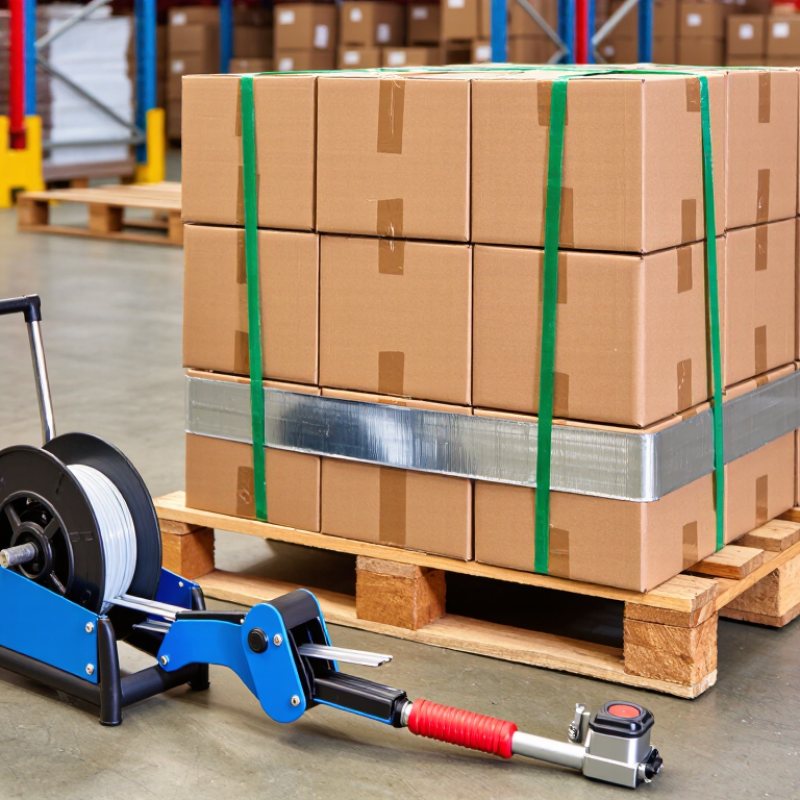
Choosing pallet banding materials starts with the load, not the tool. Lightweight cartons often work well with polypropylene banding. It is flexible, economical, and less likely to damage soft packaging. Polyester banding offers stronger tension for dense boxes, timber cases, and mixed loads. Steel banding handles severe loads, but it needs careful handling and suitable protective equipment.
The banding tool must match the material. A manual tensioner suits occasional packing and lower shipment volumes. For regular warehouse work, a battery-powered tensioner can improve speed and tension consistency. You may also need a sealer, seals, a cutter, and corner protectors. Corner protectors are easy to overlook. They prevent bands from cutting into cardboard edges during tightening.
Measure the pallet before choosing the kit. A tall, unstable load may need vertical and horizontal bands. Smooth surfaces can reduce grip, especially during vibration or long transport. I have seen tightly banded cartons shift because the pallet was uneven. More tension did not solve the problem. Better stacking did. Test the banding on one finished pallet, then inspect crushed corners, loose bands, and movement. A practical kit should protect the load without forcing workers to fight the equipment. Some packing choices still require review when weather, storage time, or repeated handling changes.