
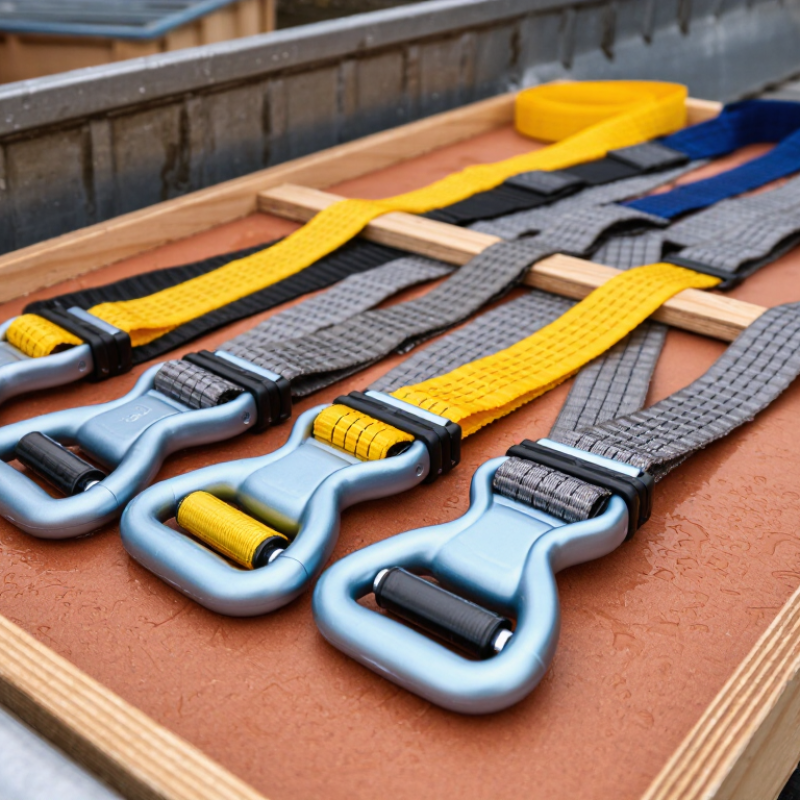
7 Tips to Choose the Best Buckle Tie Down Straps
Match strap strength to your load and vehicle. The Federal Motor Carrier Safety Administration requires the aggregate working load limit to equal at least half the cargo weight. For a 600-kilogram load, your tie-down system should provide at least 300 kilograms of combined working load limit. Do not confuse breaking strength with working load limit. WSTDA guidelines also emphasize clear ratings, labels, and inspection practices. A strap can look strong and still be unsuitable.
- Tip one: Weigh the cargo, including tools and packaging.
- Tip two: Check the vehicle’s anchor-point rating.
- Tip three: Choose a working load limit that exceeds the calculated need.
- Tip four: Match the buckle to the strap width and webbing type.
- Tip five: Use edge protection around metal corners.
- Tip six: Inspect stitching, cuts, heat damage, and distorted buckles before every trip.
- Tip seven: Recheck tension after driving a short distance.
A practical example helps.
A loaded motorcycle trailer may need several anchor points, not one oversized strap. Keep each strap aligned with the anchor and avoid twisting the webbing. Wet straps can hide damage. That detail is easy to miss.
Replace any strap with torn fibers, faded labeling, or a buckle that slips under hand pressure. I have seen users choose straps by appearance alone, and that is a weak method. Vehicle structure, load movement, and restraint angle all matter. More strength is not automatically safer if the anchor point is weaker.