
How to Buy a Converted Container for Global Delivery?
Buying a converted container for global delivery requires more than choosing a size and requesting a freight quote. It involves design checks, supplier verification, transport planning, and accurate documentation. A converted container may include doors, windows, insulation, electrical systems, plumbing, or workshop fittings. Each modification affects weight, dimensions, handling, and shipping cost. Before ordering, define its purpose and operating environment. A unit for a coastal warehouse needs different protection than one used in a dry inland facility. Small details matter. Door seals can fail. Floor coatings can suffer during loading.
Reliable purchasing begins with evidence. Ask the supplier for material specifications, modification drawings, photographs, test reports, and a complete packing list. Confirm the container’s external dimensions, gross weight, lifting points, and CSC-related shipping suitability with qualified professionals. Electrical components should meet the destination’s applicable standards. Customs descriptions must match the actual product. Incorrect information can delay clearance or create unexpected charges. Compare quotations using the same delivery terms, insurance scope, and port responsibilities. Incoterms can clarify risk, but they do not replace professional advice.
Global delivery also requires realistic planning. Confirm whether the destination port accepts modified units and whether local equipment can unload them safely. Check road restrictions before arranging inland transport. A supplier may promise fast production, yet customization often takes longer than expected. That is worth questioning. Inspect the finished unit before dispatch, preferably through an independent inspection service. Keep every drawing, invoice, certificate, and photograph in one file. Careful preparation cannot remove every risk, but it can make your converted container purchase more predictable, compliant, and easier to manage.
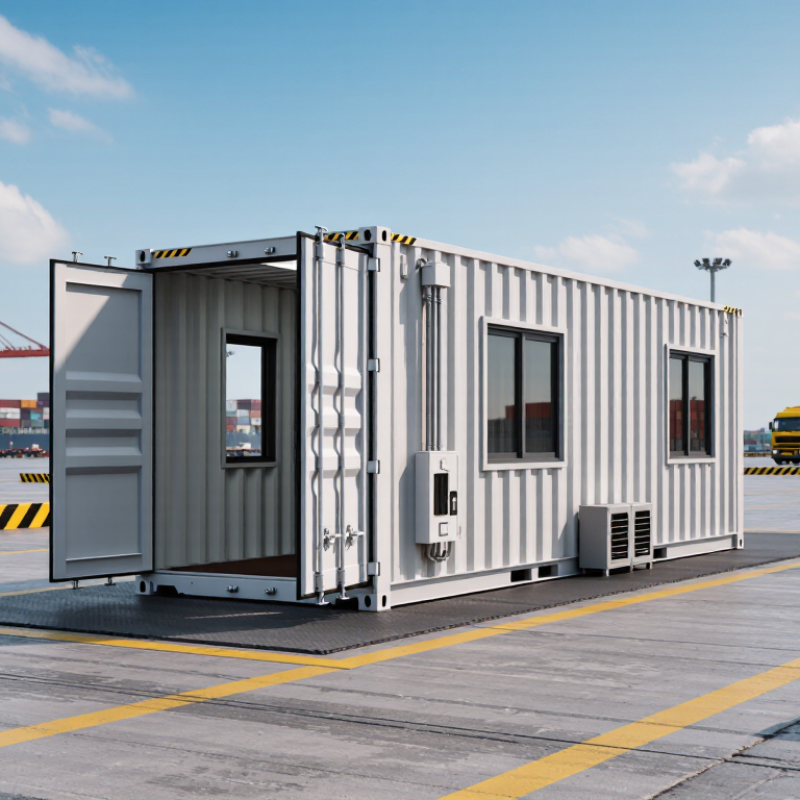
Table of Contents
[Hide]
Define Your Use Case and Select ISO 668 Container Sizes
How to Buy a Converted Container for Global Delivery?
Define the use case before choosing a container. A site office needs different features from a mobile workshop or retail unit. List the internal equipment, door positions, insulation needs, ventilation, and expected number of users. Measure bulky items before ordering. A floor plan can reveal problems early.
ISO 668 provides a dependable reference for container dimensions. The common 20-foot unit offers compact handling and lower site requirements. A 40-foot unit provides more floor space but needs a larger delivery route and foundation. High-cube versions add internal height, which helps with shelving, ducting, and insulation. Check the exact external dimensions, tare weight, maximum gross mass, and corner fitting locations on the supplier’s drawings.
Small details matter. A converted container may have windows, cut-outs, added flooring, or heavy machinery. These changes can affect weight distribution, lifting points, and stackability. Ask for structural calculations and modification records. Request recent photographs, not only computer renderings. Confirm that the finished unit remains suitable for the planned transport method and destination handling equipment. My first estimate is often too optimistic. Delivery routes need checking again after the design changes. Allow space for cranes, turning circles, overhead cables, and temporary storage. A practical inspection should examine corrosion, welds, door seals, frame alignment, and water entry. Do not assume a standard size guarantees trouble-free international movement.
| ISO 668 Container Type | Nominal External Size | Approximate Internal Space | Typical Internal Volume | Best-Fit Converted Use Case | Global Delivery Considerations |
|---|---|---|---|---|---|
| 20 ft Standard Dry | 20 ft × 8 ft × 8 ft 6 in 6,058 × 2,438 × 2,591 mm |
Approximately 5,898 × 2,350 × 2,390 mm | Approximately 33 m³ |
Compact workshop Small retail unit, equipment room, storage room, or mobile office. |
Easier to place on constrained sites and generally simpler to transport by road, rail, or sea. Confirm the finished converted weight and local lifting access. |
| 40 ft Standard Dry | 40 ft × 8 ft × 8 ft 6 in 12,192 × 2,438 × 2,591 mm |
Approximately 12,032 × 2,350 × 2,390 mm | Approximately 67 m³ |
Large workspace Multi-room office, classroom, workshop, secure storage, or technical facility. |
Provides substantially more floor area, but requires a longer delivery route, a larger placement area, and suitable lifting equipment. |
| 40 ft High Cube Dry | 40 ft × 8 ft × 9 ft 6 in 12,192 × 2,438 × 2,896 mm |
Approximately 12,032 × 2,350 × 2,695 mm | Approximately 76 m³ |
Height-sensitive conversion Accommodation, insulated offices, mechanical rooms, or projects needing extra ceiling clearance. |
Offers about 305 mm more external height than a standard-height container. Check bridge, gate, overhead-cable, zoning, and crane-clearance restrictions before purchase. |
| 20 ft Refrigerated | Typically 20 ft × 8 ft × 8 ft 6 in External dimensions vary by model |
Reduced by insulated walls and refrigeration equipment | Usually lower than a 20 ft dry container |
Temperature-controlled space Cold room, laboratory support room, food storage, or insulated technical enclosure. |
Requires inspection of the refrigeration unit, power requirements, insulation condition, floor condition, and refrigerant-related compliance obligations. |
| 40 ft Refrigerated | Typically 40 ft × 8 ft × 8 ft 6 in External dimensions vary by model |
Reduced by insulated walls and machinery | Often around 60–67 m³, depending on design |
Large insulated facility Chilled storage, specialist processing area, or temperature-managed distribution space. |
Confirm electrical supply, operating noise, drainage, maintenance access, and whether the converted unit will still be transported as cargo. |
| Purchase checklist: Define the intended use, required internal dimensions, finished weight, cargo-loading method, insulation and ventilation needs, door configuration, utility connections, lifting points, route restrictions, and applicable local building or transport rules. ISO 668 dimensions are nominal; actual internal dimensions, tare weight, payload, and allowable gross mass depend on the specific container and its certification plate. | |||||
Related Posts
-
10 Best Custom Built Shipping Containers for Efficient Storage Solutions in 2023
-

2026 Best Cargo Container House Designs for Sustainable Living?
-

Top 5 Cargo Container House Designs You Need to Know?
-

Top 10 Custom Shipping Container Builders for Your Next Project
-
10 Essential Tips for Choosing Custom Cargo Containers for Your Shipping Needs
-

2025 Top Trends in Shipping Container Construction: Innovations and Uses

© 2023 Integrated Modular Solutions. All Rights Reserved