
2026 Top Spindle Hub Bearing Assembly Types Buyers Need
How Spindle Hub Bearing Assemblies Are Classified
Classification starts with architecture, not merely bearing diameter. Fortune Business Insights’ 2024 automotive wheel bearing report estimates the global market near USD 10 billion in 2023. This growth increases replacement demand and specification risk. Buyers should classify assemblies by generation, load path, flange design, sealing, preload, and sensor provision. This sounds technical. It is practical.
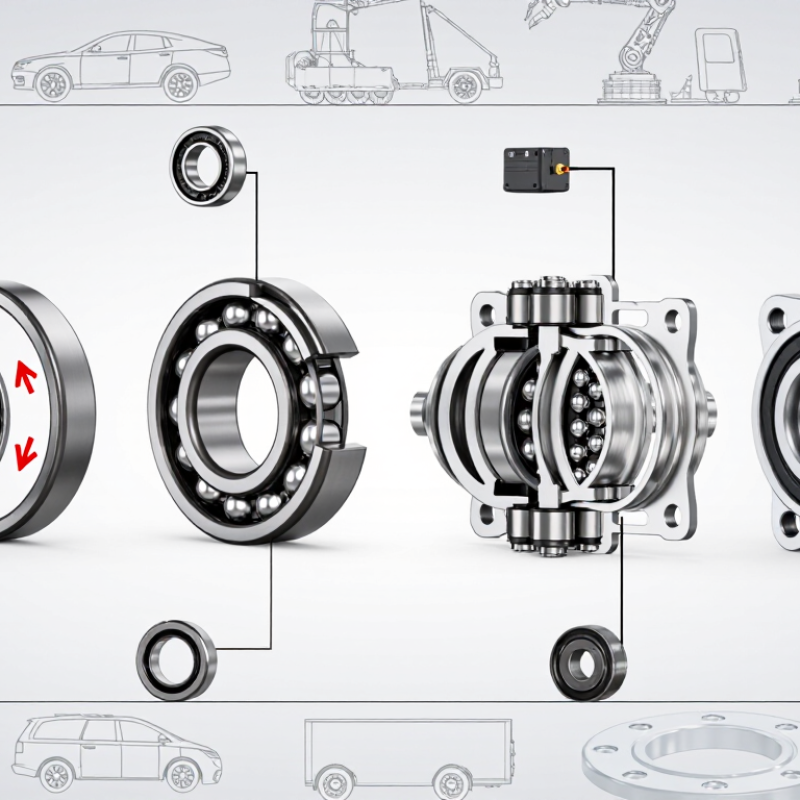
First-generation assemblies use separate hubs and bearings. They allow service replacement but require accurate press fits. Second-generation designs integrate a flange with the outer ring. This improves packaging and installation repeatability. Third-generation assemblies add a hub flange, encoder, and often an integrated speed sensor. Some applications use double-row angular-contact bearings, while others favor tapered-roller arrangements. The correct choice depends on radial load, axial load, stiffness, speed, and maintenance access.
ISO 15243 classifies bearing damage by mechanisms such as fatigue, wear, corrosion, and electrical erosion. That framework helps buyers connect assembly type with inspection findings. A 2024 technical market assessment also identifies sensor-enabled wheel-end systems as a major development direction. However, generation labels are not perfectly universal. Catalog conventions can differ. I would verify flange geometry, encoder orientation, connector position, and torque requirements before approval. A visually similar assembly may still produce incorrect signal timing, poor preload, or premature noise. Small details matter.