
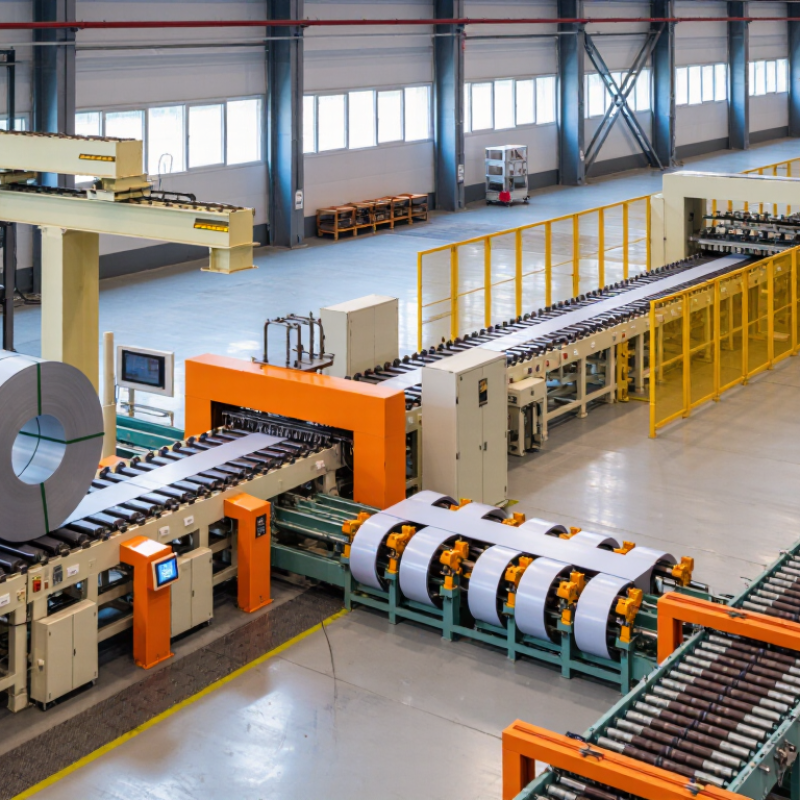
A transformer core cutting line must handle 0.23–0.30 mm grain-oriented electrical steel with controlled tension and clean slitting. Thin laminations reduce eddy-current losses, but they also punish poor alignment. A small burr can damage insulation and increase local heating. Small details matter.
Buyers should read ASTM A677 carefully. ASTM A677/A677M generally covers fully processed non-oriented electrical steel, so it should not automatically define grain-oriented steel for transformer cores. For GO steel, confirm the applicable material standard, magnetic properties, thickness tolerance, coating quality, and core-loss values with the mill and testing laboratory. Do not rely only on a supplier’s certificate. Check samples.
A reliable cutting line should maintain accurate step-lap lengths, stable stacking, and repeatable angle control. Operators should inspect strip edges, punching marks, burr height, and lamination count during production. A clean workshop also protects the coating from dust and metal fragments. Measure twice.
In practical purchasing, request trial-cut results using the actual 0.23–0.30 mm material. Review core-loss data before and after cutting. The figures may differ. This is where many plans become too optimistic. Cutting speed is useful, but excessive speed can reduce accuracy and raise waste. A balanced specification should include tolerance records, calibration procedures, operator training, and traceable inspection reports.